
++ Housing, utilities, and food assistance are among the top needs of people seeking assistance nationwide, a survey conducted for United Way Worldwide finds. Read more.
The Commonwealth of PA has unveiled its Housing Action Plan, a tool for addressing the Commonwealth’s affordability housing crisis. Read the Plan. View a recent slide deck about the Housing Action Plan.
The National Low Income Housing Coalition has released its annual report, The Gap: A Shortage of Affordable Homes. The report finds that the lowest-income renters in the U.S. face a shortage of 7.2 million affordable and available rental homes. Just 35 affordable and available homes exist for every 100 extremely low-income renter households. This shortage of affordable and available housing leaves the lowest-income renters saddled with the highest rates of housing cost burdens among any income group. Eighty-seven percent of the lowest-income renter households are cost-burdened, spending more than 30% of their income on housing, and 74% face severe cost burdens, spending more than 50% of their income on housing costs.
| The National Low Income Housing Coalition has released Advancing Equity: Strategies, Tactics, and Best Practices for Disaster-Impacted Communities, a comprehensive toolkit for advocates and organizers in communities that have experienced or are likely to experience climate change-induced disasters. Alongside their other destructive consequences, disasters cause housing instability, homelessness, and permanent displacement and often exacerbate existing racial and social inequities. Advocates are encouraged to use the new toolkit to educate policymakers and the public about the systemic barriers to equitable and complete disaster housing recovery and the steps necessary for reforming our nation’s disaster housing recovery framework. |
The National Low Income Housing Coalition has released “Resources for Disaster Response, Recovery, and Resilience: A Toolkit for Advocates and Community-Based Organizations.” This comprehensive toolkit supports people before and after disasters, addressing short-term and long-term recovery, resilience, and mitigation. Disasters often lead to housing instability, homelessness, and permanent displacement, and they frequently worsen existing racial and social inequities. Learn more and download the toolkit.
| To search for shelters near you, text SHELTER and the ZIP code to 43362 (e.g. Shelter 12345). You may look up shelters any time through the American Red Cross shelter map or by downloading the FEMA App. |
The application period is open for this year’s Property Tax/Rent Rebate program, which provides rebates from $380 to $1,000 to eligible older adults and people with disabilities age 18 and older. The Pennsylvania Department of Revenue is accepting applications for rebates on property taxes or rent paid in 2025. Forms and instructions are available online, and eligible Pennsylvanians are encouraged to file their applications via myPATH to ensure their rebates are processed as quickly as possible.
| ++ The Veterans Affairs Servicing Purchase (VASP) program helps veterans experiencing severe financial hardship avoid foreclosure and stay in their homes. If you are working with survivors who are veterans please Read More. |
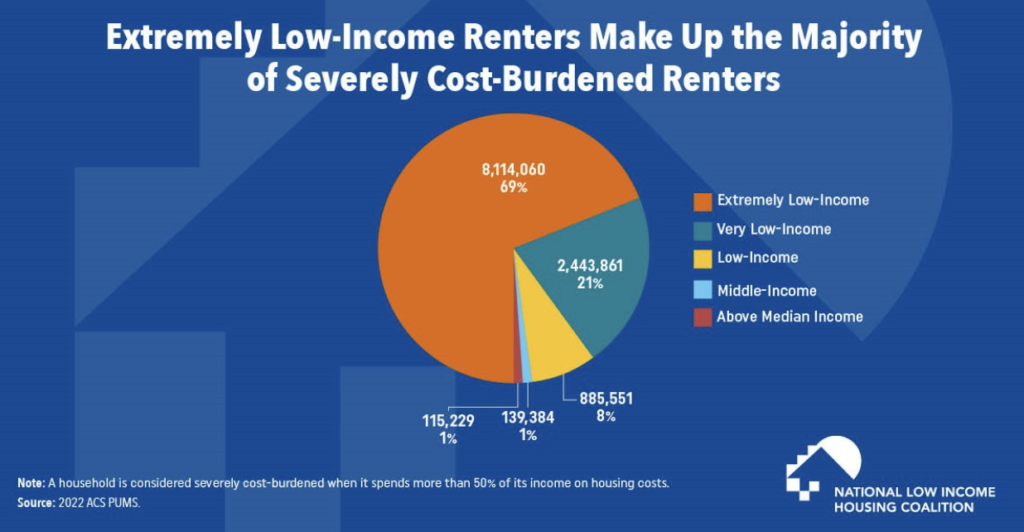
Note: A household is considered severely cost-burdened when it spends more than 50% of its income on housing costs.
Source: 2022 ACS PUMS.
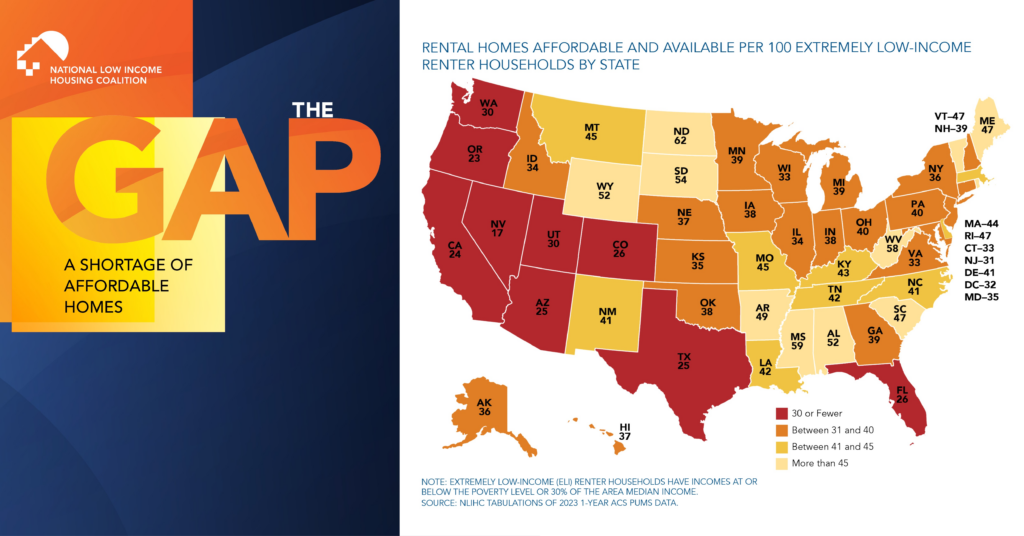
Source: The Gap, NLIHC 2025
++ Sheltering Taskforce Toolkit: https://bit.ly/COVID-19ShelteringTaskforce
++ The National Low Income Housing Coalition’s Disaster Housing Recovery Update is available.
++ You can visit www.dhs.pa.gov/masscare to read about mass care in Pennsylvania, and disaster feeding. You can self-manage your subscriptions PA DHS publications at this site also.